
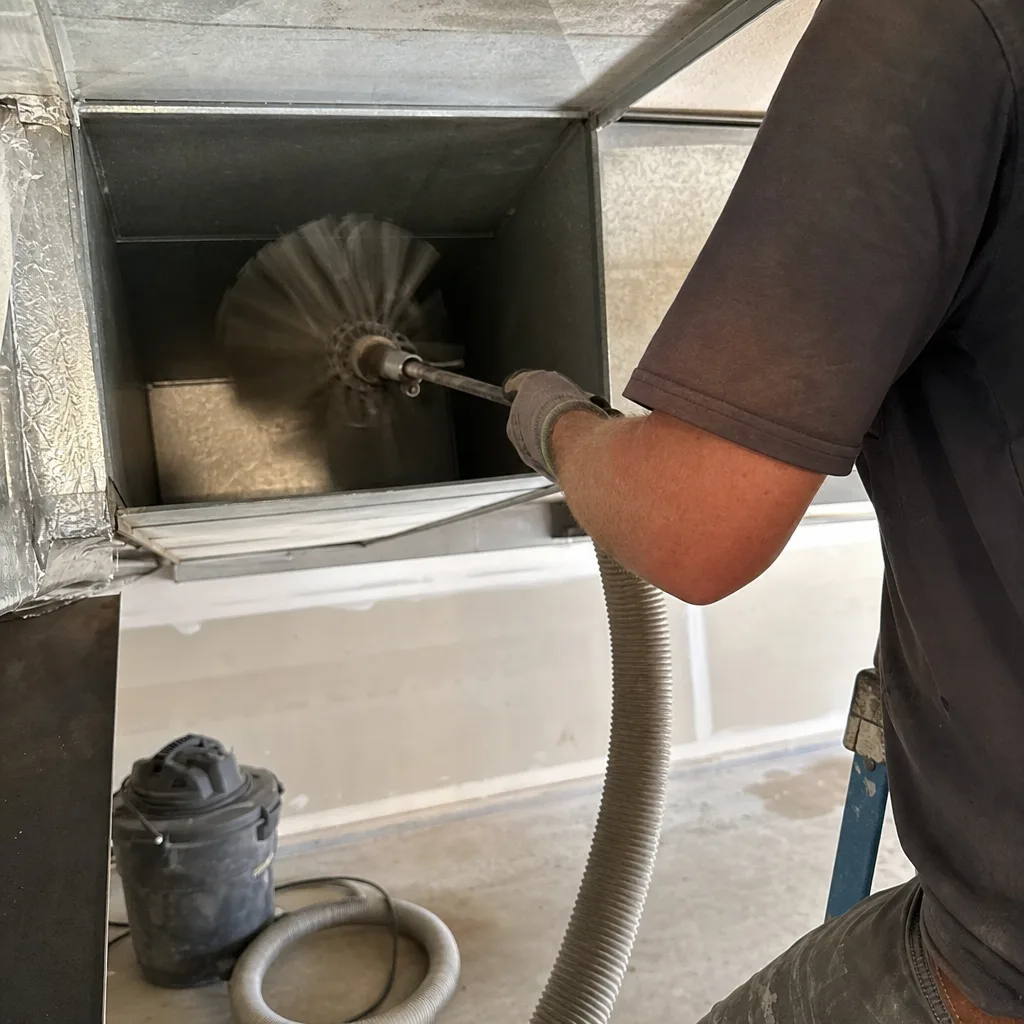
Last updated November 22, 2026
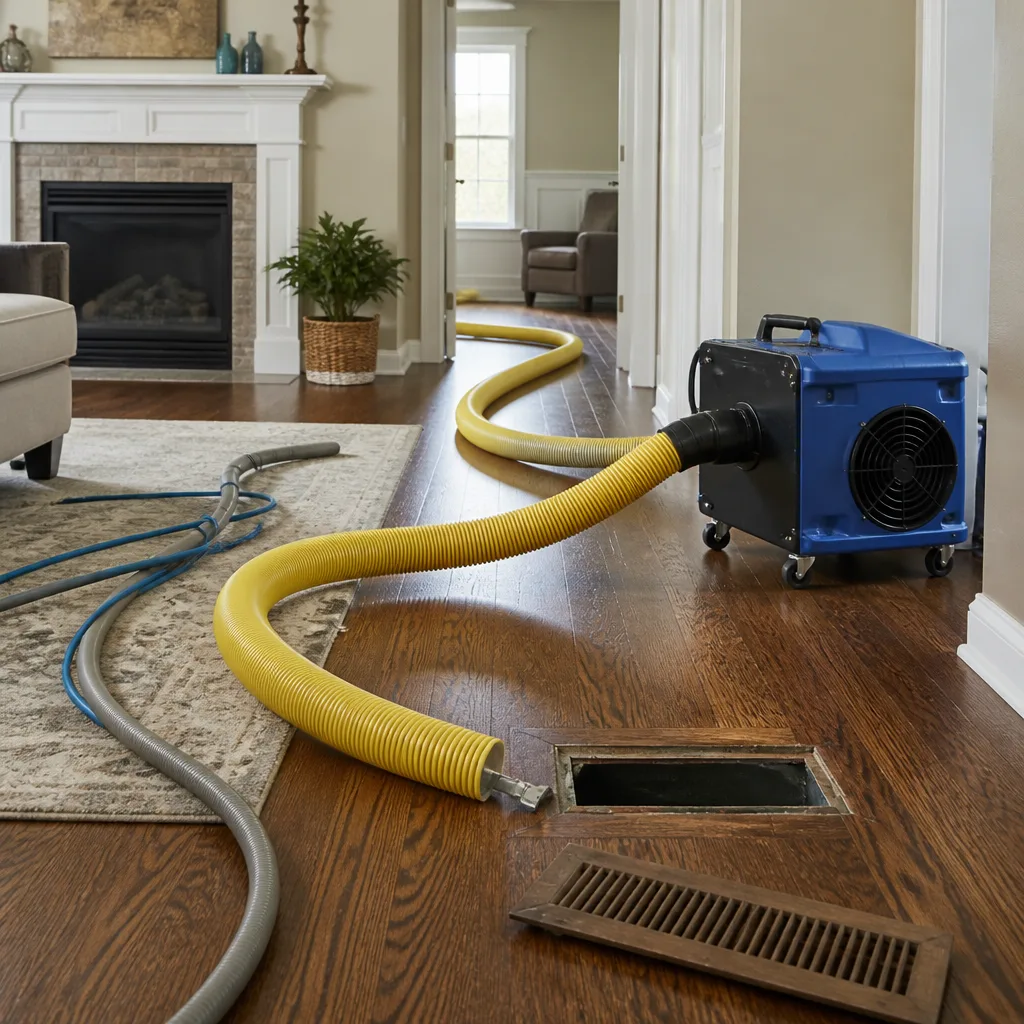 Whole-home duct cleaning
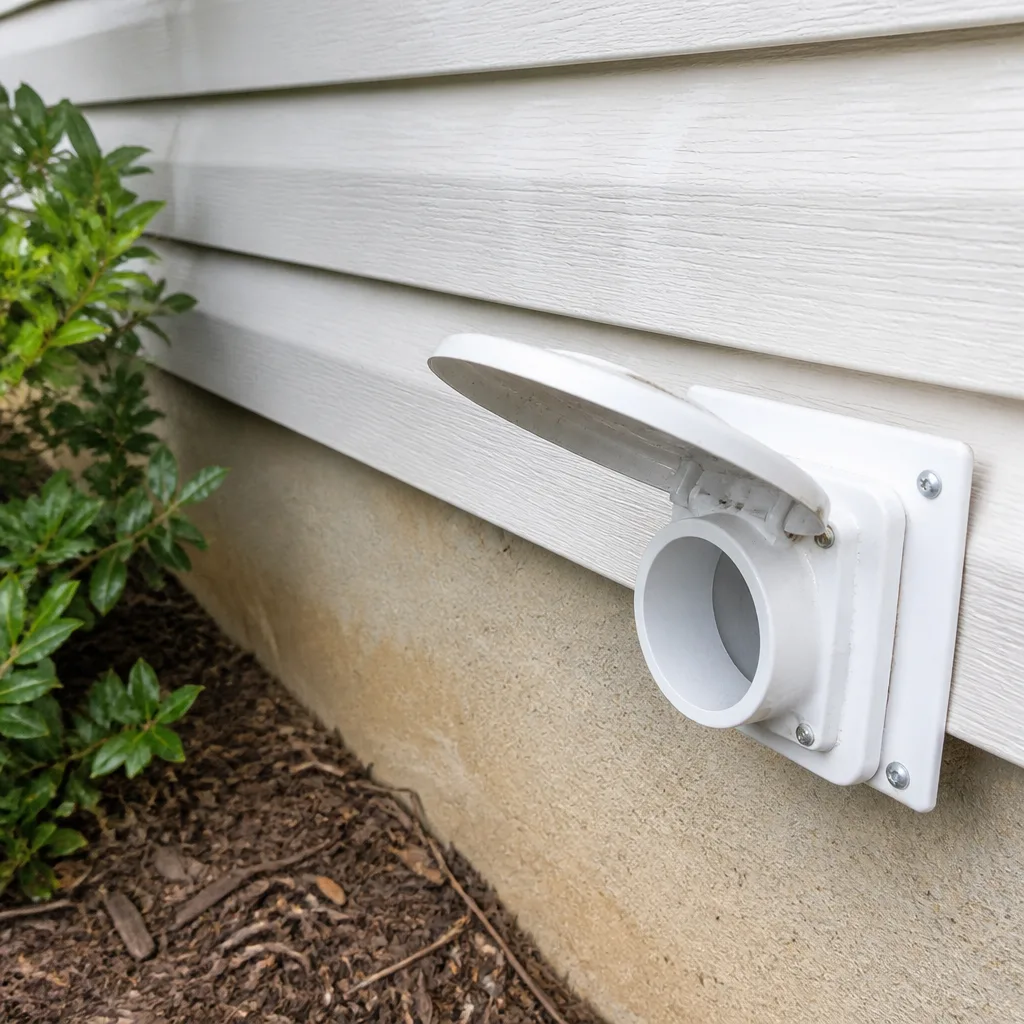 Dryer vent cleaning
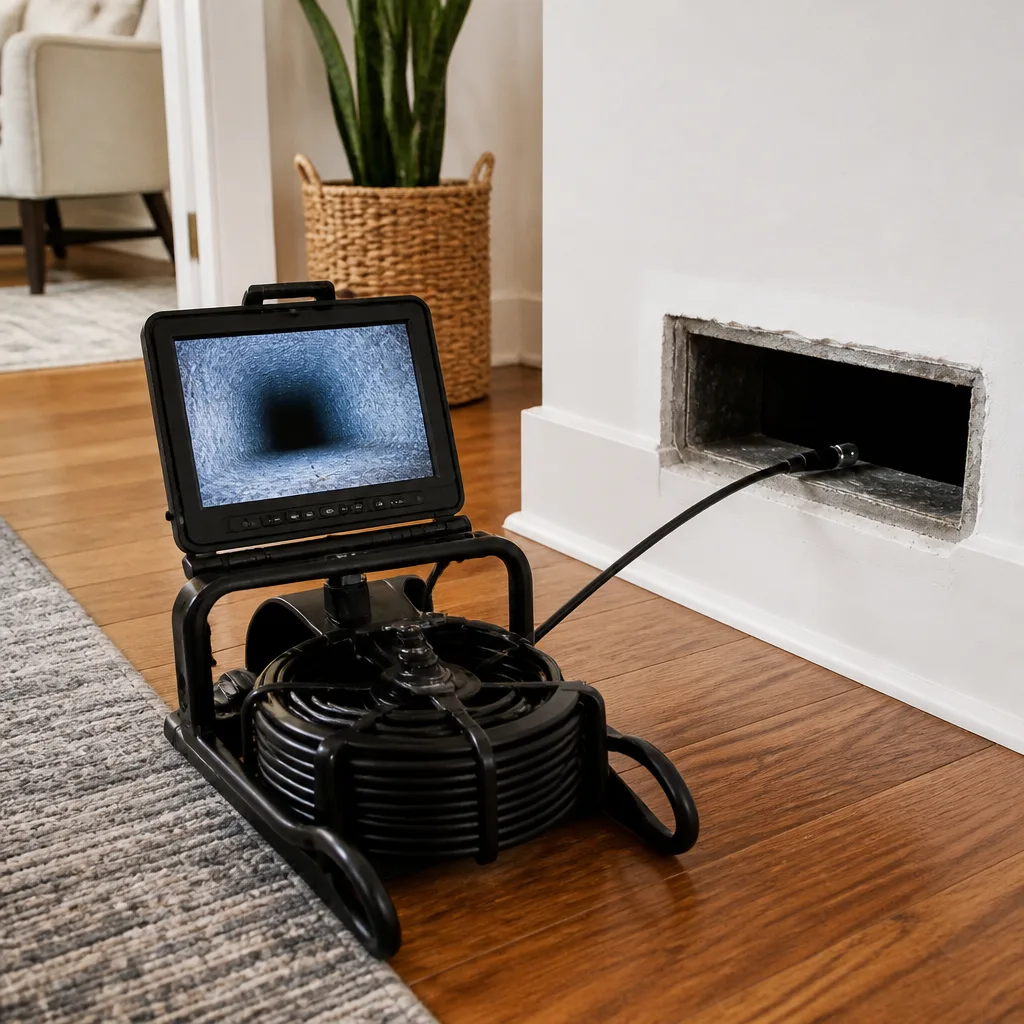 Camera inspection
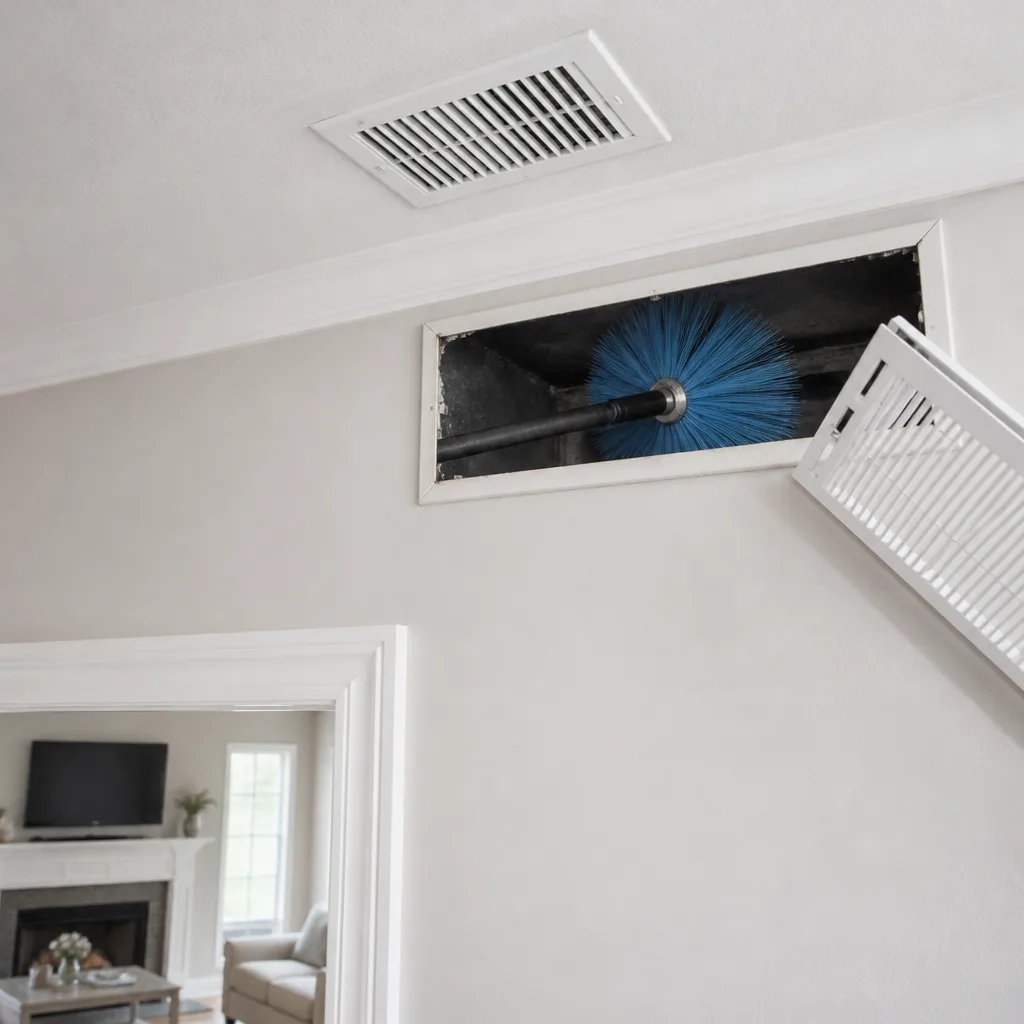 Sanitizing & deodorizing
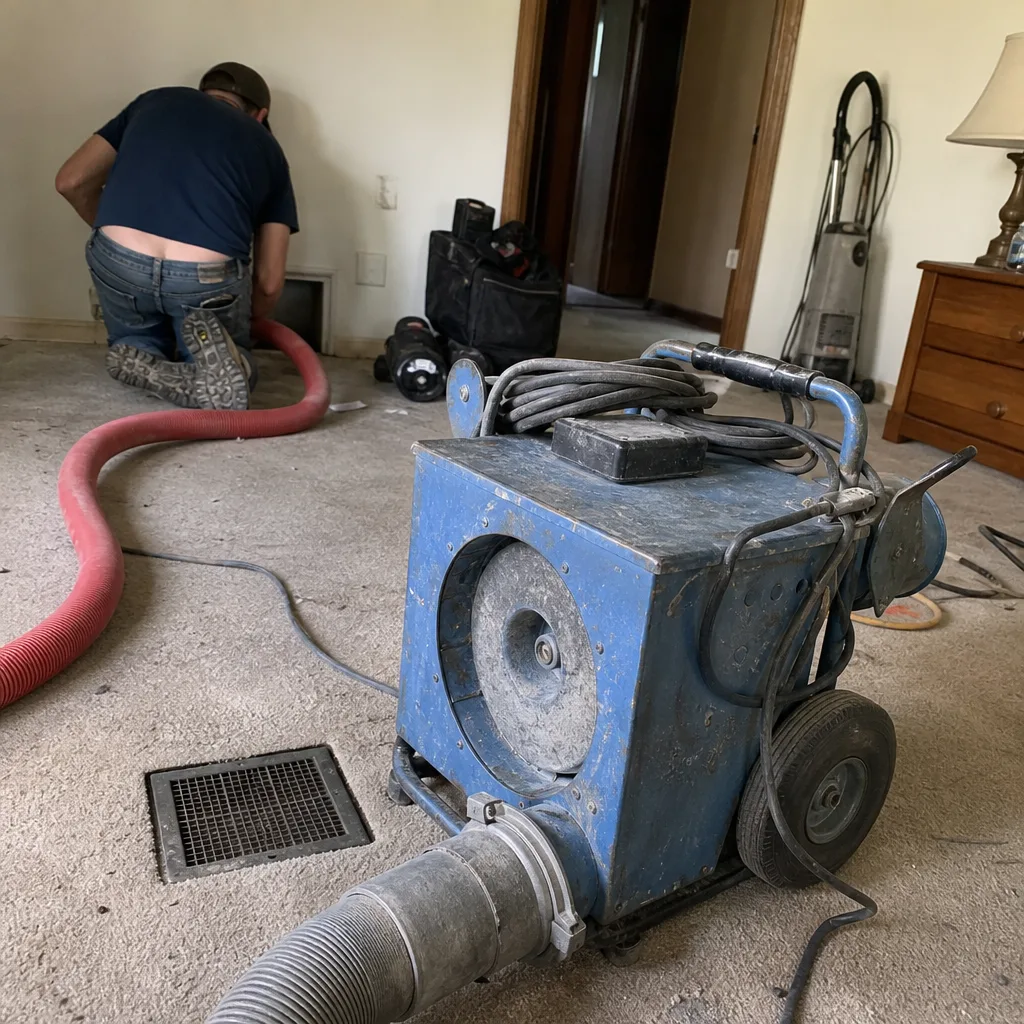
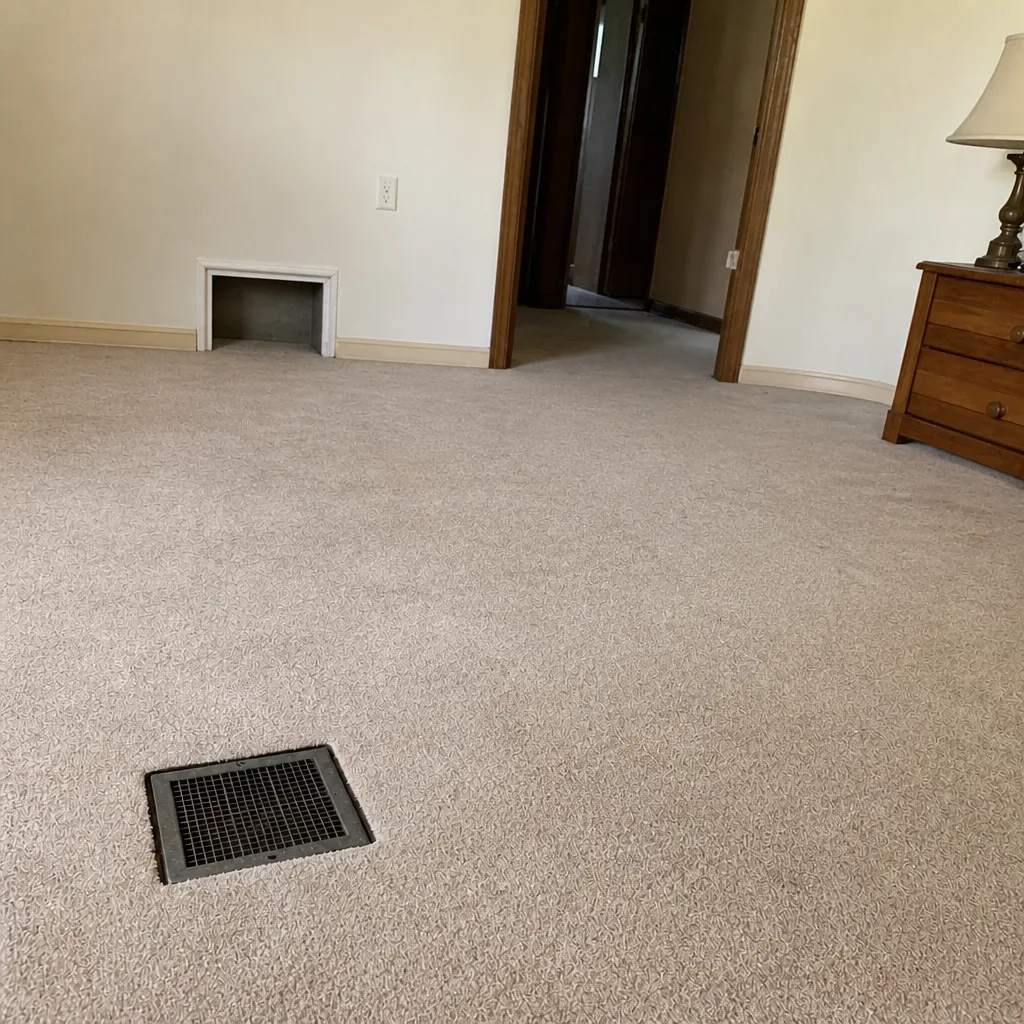
Whole-system duct and dryer vent check with before-and-after photos - you see exactly what came out of your vents
That "$99 whole-house special" is a bait ad - the real number appears once they are in your hallway, or the "clean" is a shop-vac at the register. We photograph the inside of your ducts before and after instead.
Air Duct Cleaning Maintenance Schedule: What to Do and When
Most advice about duct cleaning treats the calendar as the trigger: clean every three to five years, no questions asked. That rule misses the point. A household with two shedding dogs and a basic fiberglass filter can load duct surfaces faster in eighteen months than a childless couple running a MERV-13 filter will in seven years. The calendar isn’t the trigger. The system conditions are. This guide gives Bellevue homeowners a variable-interval framework built on pet load, occupancy, allergy history, renovation activity, and filter quality, so the schedule fits the home instead of a slogan. You’ll also get the monthly homeowner tasks that stretch the interval, the seasonal timing that matters in middle Tennessee, and a simple vent test you can run with a flashlight and a white cloth.
Styles & brands we work with
- Whole-home duct cleaning
- Dryer vent cleaning
- Camera inspection
- Sanitizing & deodorizing
Quick Answer
The right interval for air duct cleaning depends on the conditions inside the home, not on the year on the calendar. Most homes in Bellevue, TN fall between three and five years between full cleanings, but heavy-shedding pets, smokers, recent remodeling, or chronic allergy symptoms pull that down to eighteen months to three years, while a low-occupancy, no-pet home with a high-efficiency filter can stretch to six or seven years. Filter changes every one to three months extend the interval more than any other single habit.
Table of Contents
- The Variables That Actually Drive Contamination
- A Variable-Interval Decision Matrix
- The Monthly Tasks That Extend Your Interval
- Seasonal Timing in Bellevue, TN
- The Flashlight-and-White-Cloth Vent Test
- When to Schedule Sanitizing Between Full Cleanings
- Duct Repair and Sealing: The Step Most People Skip
- Common Mistakes to Avoid
- When to Call a Professional
- Frequently Asked Questions
- The Bottom Line
The Variables That Actually Drive Contamination
Duct contamination isn’t a slow, uniform accumulation. It builds at different rates depending on four levers, and once you understand them, the “every three to five years” rule starts to look like a rough average rather than a recommendation.
Pet load. A single short-haired cat adds a modest amount of dander and hair to the return air stream. Two double-coated dogs, however, shed for weeks at a time in spring and fall, and that material doesn’t stay suspended. It settles on duct walls and in the elbows where airflow slows. In our experience around Bellevue, homes with two or more heavy-shedding pets frequently need attention at the eighteen-month to three-year mark rather than the four- or five-year mark.
Occupancy and daily activity. A two-person household with one person working from home generates less dust and lint than a family of five where everyone is underfoot all day. More people means more skin cells, more fabric fibers, more foot traffic moving particulate into the air. It’s not a dramatic difference, but it compounds.
Smokers and cooking load. Tobacco smoke and heavy indoor cooking both feed the return air a steady stream of fine particulate that a standard filter catches only partially. That particulate deposits along the supply and return runs. Homes with a smoker or a serious home-cooking habit trend toward the shorter end of the schedule.
Filter quality. This one surprises people. A quality pleated filter rated MERV-11 or MERV-13 removes far more particulate before it ever reaches the ducts than a $2 fiberglass panel will. The fiberglass panel protects the blower and little else. If you’ve been running the cheap filter for years, the ducts have been doing more of the filtering than they should.
Renovation activity belongs on the list too. Drywall dust is relentless, and a kitchen or bath remodel without return-side containment pushes fine gypsum particulate through the whole system. Bellevue’s steady stream of older-home updates means this comes up more often than people expect.
A Variable-Interval Decision Matrix
Rather than guessing, use this matrix. Score the conditions that apply to your home, and the count tells you roughly where the interval sits. This is the same kind of logic we apply when we size a job, and it’s a far more useful starting point than picking a number off a calendar.
Add one point for each condition that applies:
- Two or more shedding pets
- One or more household members with diagnosed allergies or asthma
- Regular tobacco smoking indoors
- Major renovation completed in the last two years (kitchen, bath, flooring, drywall)
- Basic fiberglass filter in use, changed less than every three months
- More than four people living in the home
- Visible dust settling on surfaces within days of cleaning
- Heavy indoor cooking with little ventilation
Interpreting the score:
- 0 points: Full cleaning every six to seven years. Low load, filter doing its job.
- 1 to 2 points: Every four to five years. The typical Bellevue home falls here.
- 3 to 4 points: Every two to three years. Contamination is building steadily.
- 5 or more points: Every eighteen months to two years, plus an annual inspection to catch problems early.
The matrix isn’t gospel, but it captures the conditions that actually matter. If you’re unsure what your home scores, an inspection is the faster path. Call (877) 560-9584 for a free estimate and we’ll assess the system directly rather than running a number in your head.
The Monthly Tasks That Extend Your Interval
Here’s the part most guides skip: the homeowner’s monthly routine does more to extend the cleaning interval than any single service. The ducts only collect what the filter and the entry points let through. Tighten those two variables and the timeline stretches noticeably. None of these tasks take more than a few minutes.
- Check the filter every month. Hold it up to a light. If you can’t see through the pleats, it’s done. Replace or clean it as needed. A pleated filter that’s been in for six months with visible gray loading has been passing particulate through for months.
- Wipe down the supply and return grilles. A damp cloth across the louvered surface once a month removes dust that would otherwise cycle back into the air stream on the next blower cycle. Keep the cloth damp, not wet, and don’t press into the grille fins.
- Inspect the return grille quarterly. Pop it loose and look behind it. Heavy dust accumulation on the visible interior tells you contamination is building in the duct behind that return. A light dusting is normal; a visible layer of fuzz means the system is loading.
- Watch the blower compartment. Pull the filter and look at the blower wheel. Dust and lint on the blades means particulate is getting past the filter and accumulating elsewhere too.
- Vacuum registers from the room side only. A no-touch pass over the grille face with a brush attachment is fine. Don’t push a household vacuum wand into the duct, and don’t try to reach down the boot. You’ll knock loose material into the run without capturing it.
- Keep the return pathways clear. Furniture blocking a return grille starves the system and increases velocity at every other return, which moves more particulate into the ducts. A few inches of clearance matters more than people think.
Done consistently, this monthly routine pushes a two-to-three-year cleaning to a four-to-five-year cleaning in many homes. It’s a small amount of effort that pays off over years.
Seasonal Timing in Bellevue, TN
Timing matters, and Bellevue has a specific rhythm worth understanding. Middle Tennessee runs a long, humid heating season into a hot, humid cooling season with a short shoulder window between them. The HVAC system in a typical Bellevue home runs a lot of hours over a typical year, which means the blower is moving air through the ducts nearly year-round. This is where local timing differs from drier climates.
Spring, after the heating season closes out, is the ideal window. The furnace has just finished months of running, pushing warm air and combustion byproducts through the system, and the ducts reflect that. Whole-house HVAC cleaning in April or May clears the accumulated load before the cooling season starts pulling that material back through the living space as the system switches to cooling. In an area with a long heating season and a long cooling season, you don’t get a natural break to catch up; cleaning in the shoulder is the closest thing to a reset.
Fall, before the heating season begins, is the second-best timing. A late-September or October cleaning ensures the furnace comes online with clean return runs, before dust has had a chance to bake onto heat exchangers and duct surfaces over winter.
Summer and mid-winter cleaning still works fine, but you’re cleaning mid-cycle, not between cycles. There’s no wrong time to address a contamination problem, just a best time.
One local factor to note: humidity. Bellevue summers run muggy, and humid air moving across cool duct surfaces in a properly operating system can encourage mold growth in poorly sealed or inadequately insulated ductwork. If you’ve ever noticed a musty smell when the AC first kicks on, that’s a sign worth taking seriously. A thorough cleaning combined with assessment of sealing and insulation is the practical response, and it’s the kind of full-system approach we take.
Dryer vent cleaning is worth syncing with the same seasonal rhythm. The dryer runs heavily in winter when clothes don’t dry outside, so a vent cleaning in early fall, before the heavy-use months, is a sensible pattern for Bellevue households. If you haven’t had the vent cleaned since the last seasonal shift, that’s a reasonable reason to book.
The Flashlight-and-White-Cloth Vent Test
The cheapest inspection tool in your house is a flashlight and a white cotton rag. This two-minute test tells you whether a professional assessment is due, without any specialty gear. It’s not a substitute for a proper inspection, but it’s a reasonable early signal.
The test:
- Remove a supply grille, usually the one in the most-used room. Pull it straight down after loosening the screws.
- Shine a strong flashlight down into the boot and along the visible interior duct wall at an angle, not straight down.
- Wipe a white cotton cloth along the interior wall of the boot, just inside the opening.
- Look at the cloth. A few fine gray specks are normal. A visible coating of dark material, hair, or fibrous fuzz means the duct is loading.
- Repeat on a return grille. Returns often show heavier accumulation than supplies because they pull the loaded air off the floor, so if returns look bad, that’s the more reliable signal.
Reading the results:
- Cloth shows light gray dust, no fuzz: Routine maintenance is working. Stay on the monthly tasks and re-check in six months.
- Cloth shows a visible coating or material clumps: Cleaning is likely due within the next few months.
- Cloth comes back dark, or you notice a musty or stale smell when the system first kicks on: Book an inspection now. That smell often points to moisture or microbial growth in the system.
This test is useful, but it only sees what the flashlight sees. In our experience, the deep duct runs, the trunk line, and the interior of the air handler hold the real accumulation, and those need professional-grade equipment to see and reach. That’s the reason we run Rotobrush and Nikro systems on Bellevue homes: the brush-and-vacuum design actually contacts the duct walls, unlike a household vacuum with a length of flexible hose.
When to Schedule Sanitizing Between Full Cleanings
Sanitizing is not the same service as cleaning. Cleaning removes the physical accumulation. Sanitizing treats the surfaces afterward to address microbial growth, odor, and lingering organic material. Treating the two as one service isn’t always right. Sometimes a homeowner with a clean system but a persistent odor or an allergy flare-up needs sanitizing alone, not a full redo.
Schedule sanitizing as a standalone service when:
- You had a full cleaning within the last eighteen months and the ducts are physically clean but a musty or stale odor lingers when the system first comes on.
- You’ve had water intrusion, a roof leak, or a plumbing issue that affected the HVAC system and want the affected surfaces treated.
- A household member has developed new allergy or respiratory symptoms that correlate with the system running.
- You’re moving into a previously occupied home and want the air system treated before the household settles in.
- There’s been a rodent or pest issue in the duct system, and cleanup plus treatment is the appropriate response.
Wait for a full cleaning first when:
- The ducts are visibly loaded with dust and debris. Sanitizing without cleaning treats a dirty surface, which is the wrong order.
- The system has had a renovation-load event (drywall dust, debris) since the last cleaning.
The full sequence, when both are needed, is clean first, then sanitize. Skipping to sanitizing on a dirty system is a common mistake, and it doesn’t solve the underlying problem. On homes running Aprilaire or Honeywell whole-home air quality systems, we assess the filtration and humidity equipment in the same visit, so the sanitizing treatment and the equipment check happen together rather than as separate bookings.
Duct Repair and Sealing: The Step Most People Skip
You can clean a duct system perfectly and ruin the result with a leaky joint. Dirty air doesn’t just come from contamination inside the ducts; it comes from attic air, crawlspace air, and unconditioned air leaking in through gaps in the ductwork itself. In Bellevue’s older housing stock, this is common. Duct tape dries out. Flexible duct connections weaken. Joints separate at the trunk.
Sealing is a maintenance item, not a repair of last resort. When the following signs appear, sealing is due:
- Rooms that never quite reach temperature while others overshoot
- Higher energy bills without a matching change in usage
- Visible dust streaks around duct penetrations in the attic or crawlspace
- Condensation on duct surfaces in humid weather
- Noticeable airflow loss at distant registers
A duct cleaning reveals problems you can’t see from the register side. Loose joints, disconnected runs, damaged flex duct, and crushed sections show up under proper inspection. This is why we treat repair and sealing as part of the same in-house service rather than referring the work out: fixing what we find during the cleaning visit, on the spot, is more sensible than leaving a homeowner to hunt down a separate contractor. It’s the difference between cleaning the ducts and restoring the system.
If your ductwork is old, sealing and repair are best treated as part of the full-system approach rather than an afterthought. Cleaning tells you what’s there; sealing makes sure the system you just cleaned stays clean.
Common Mistakes to Avoid
- Treating a fixed calendar as the rule. “Every three to five years” is an average across homes, not a schedule for yours. If you’ve added two dogs since the last cleaning, the timeline has already changed. Use the variables, not the calendar.
- Running cheap fiberglass filters for years. A basic panel filter protects the blower and almost nothing else. Upgrading to a quality pleated filter and changing it on schedule is the single easiest way to stretch the interval between cleanings.
- Sanitizing a dirty system. Treating surfaces with sanitizer before they’ve been cleaned presses contaminant into the duct walls and doesn’t solve the problem. Clean first, then sanitize.
- Skipping the dryer vent because the ducts were “just done.” The dryer vent is a separate system with a separate schedule, and it’s a leading cause of residential fires in the U.S. Both are due on different clocks. If you haven’t thought about the lint run lately, that’s reason enough to look at dryer vent cleaning.
- Ignoring what the cleaning reveals. Loose joints, crushed flex duct, and disconnected runs don’t fix themselves. A cleaning is the best time to catch them because the system is already open. Skipping the repair step means the next cleaning is due sooner.
- Hiring on a coupon price alone. The cheapest advertised rate in Bellevue usually depends on per-vent add-ons or upcharges that show up once the technician is already on site. Ask for one flat price for the whole system, agreed before work starts.
- Never inspecting between cleanings. The owners who get the longest intervals are the ones who run the flashlight test twice a year and catch a musty smell or a heavy return early. Problems caught early are cheaper than problems caught late.
When to Call a Professional
Some of the maintenance is yours to do. Some of it needs a technician with the right equipment, and using household gear on a loaded duct system tends to move the problem around rather than solve it. Call a professional when:
- Any household member’s allergy or asthma symptoms worsen noticeably when the system is running
- You notice a persistent musty or stale odor when the HVAC first kicks on
- The flashlight test shows a visible coating on the duct interior
- A renovation has just been completed
- The system has been through a water intrusion event
- It’s been more than five years since the last full cleaning, or your matrix score says it’s due sooner
- Airflow has dropped noticeably at any register
Air Duct Cleaning Bellevue offers free estimates in Bellevue. Call (877) 560-9584 and we’ll assess the system in your home directly. We answer 24/7, with fast dispatch from 7am to 7pm, Sunday through Friday. Our technicians have up to 11 years of experience, and we run professional-grade equipment – Rotobrush, Nikro, and Abatement Technologies for HEPA-level containment during the job – rather than the consumer-grade vacuums some operations bring. When you hear a technician explain what’s happening, that’s the reason.
For a full-system approach that includes mechanical cleaning, air quality treatment, duct repair, and dryer vent safety, the same visit can cover everything. We’ll give you one flat price for the system, agreed before work starts, and show before-and-after photos of your ducts when it’s done.
Frequently Asked Questions
Most Bellevue homes need a full duct cleaning every three to five years, but the right interval depends on how many shedding pets live there, who has allergies, whether the home has been renovated recently, and what filter is in use. A high-load home with two dogs and a fiberglass filter needs attention every eighteen months to two years; a low-occupancy home with a good pleated filter can go six or seven years. Call (877) 560-9584 and we’ll help you figure out where your home sits.
Yes, and more than most people realize. Two or more shedding pets can shorten the cleaning interval to eighteen months to three years, because dander and shed hair settle on duct walls and elbows. Heavy-shedding double-coated breeds push the timeline hardest. If your home has always had pets, the schedule you inherited from a previous owner may not match the conditions.
Yes. A quality pleated filter rated MERV-11 or MERV-13 catches a large share of the particulate that would otherwise reach the ducts, so the ducts just stay cleaner for longer. A cheap fiberglass panel is designed to protect the blower, not the ducts. Upgrading your filter and replacing it on schedule is the single most effective habit for stretching the interval between cleanings.
In Bellevue, spring is generally the better timing because it comes right after the long heating season and clears the system before cooling starts. Fall, before the heat kicks back on, is also a sensible window. There’s no wrong time to address a real contamination problem, but a full cleaning in the shoulder between heating and cooling catches the best reset. Call (877) 560-9584 and we’ll book around what your system actually needs.
Cleaning removes physical accumulation, and sanitizing treats surfaces against microbial growth and odor. You can schedule sanitizing as a standalone service when the ducts are already clean but you want the surfaces treated. If the ducts are still loaded with dust and debris, sanitizing should come after a full cleaning, not instead of it. We assess both in the same visit and give you a straightforward recommendation.
Ask for before-and-after photos of the interior of your ducts. Our technicians take photos during the job. One flat price per system is agreed before work starts, so there’s no surprise once the technician is on site, and the photos confirm what changed. Call (877) 560-9584 for a free estimate and a walk-through of exactly what the visit involves.
The Bottom Line
The calendar isn’t the trigger for duct cleaning. The conditions inside your Bellevue home are. Score your variables honestly, run the flashlight test twice a year, change your filter every one to three months, and watch the return grilles. Those habits tell you more about when cleaning is due than any “every three to five years” rule ever will. When the signs say the system needs a full clean, ask for one flat price per system, professional equipment, and photos of the work. Schedule dryer vent cleaning alongside it instead of waiting for the duct interval, and treat duct repair and sealing as part of the maintenance loop rather than a separate project.
Air Duct Cleaning Bellevue provides air duct cleaning, dryer vent cleaning, HVAC cleaning, sanitizing, and duct repair and sealing across Bellevue. Full-system work, professional equipment, one flat price per system. Call (877) 560-9584. We answer 24/7. Fast dispatch from 7am to 7pm, Sunday through Friday. We’re closed on Saturday. Air Duct Cleaning Bellevue – for more on the full picture of what a cleaning visit involves, start there.
Written by the team at Air Duct Cleaning Bellevue.
See the difference
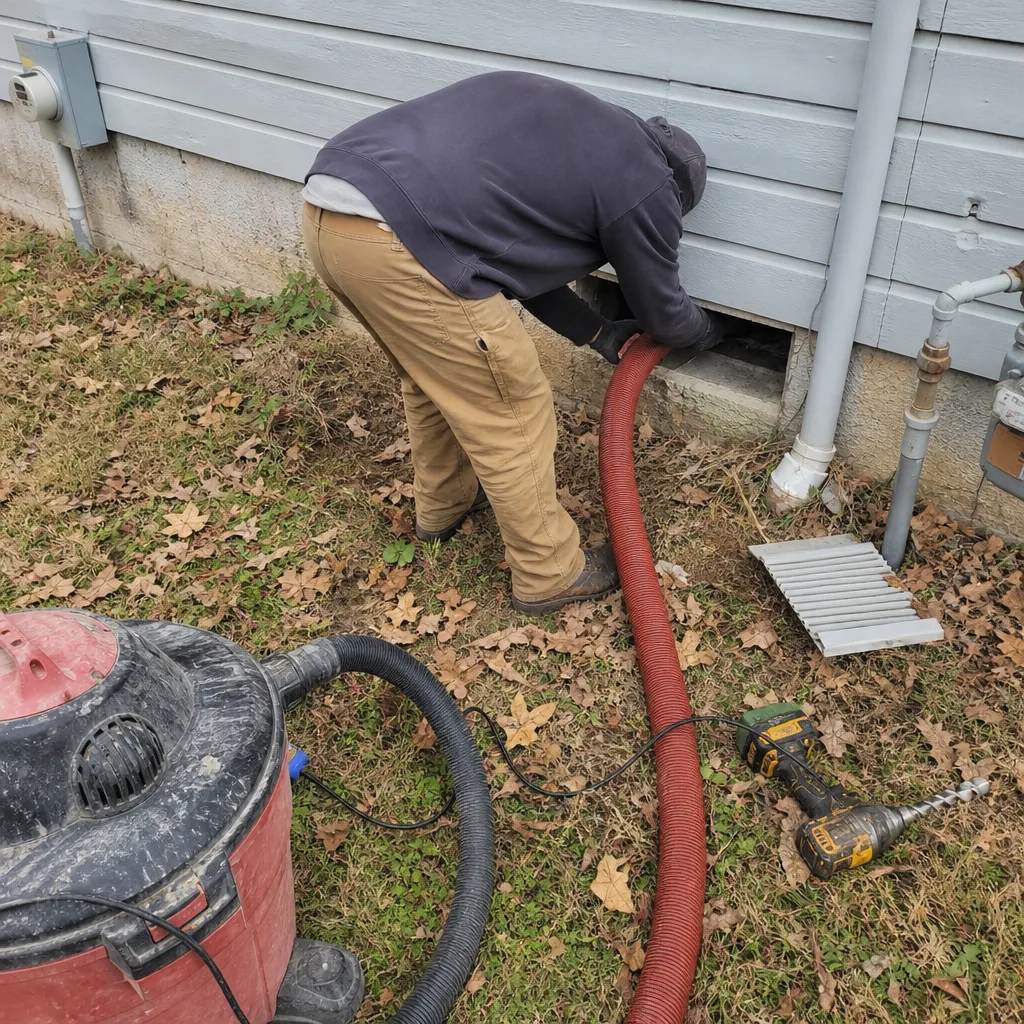 Before
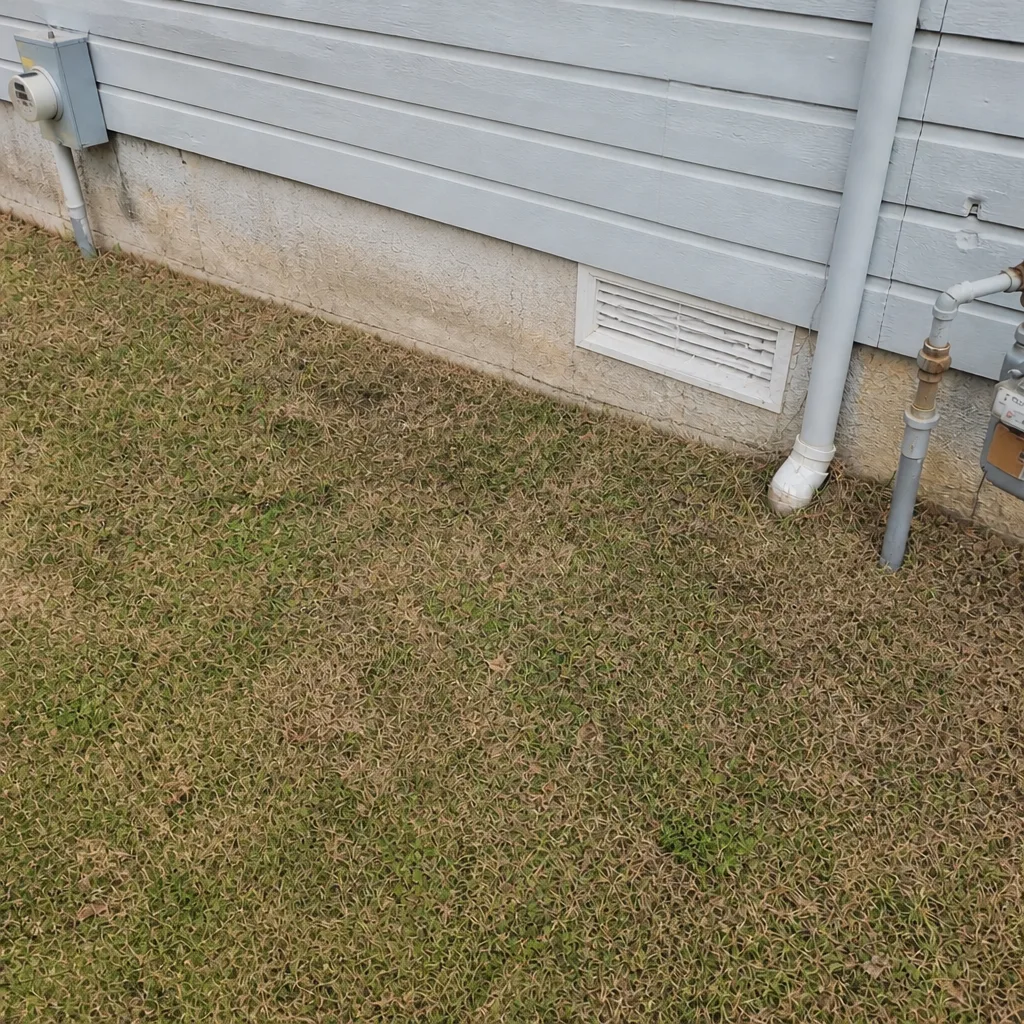 After
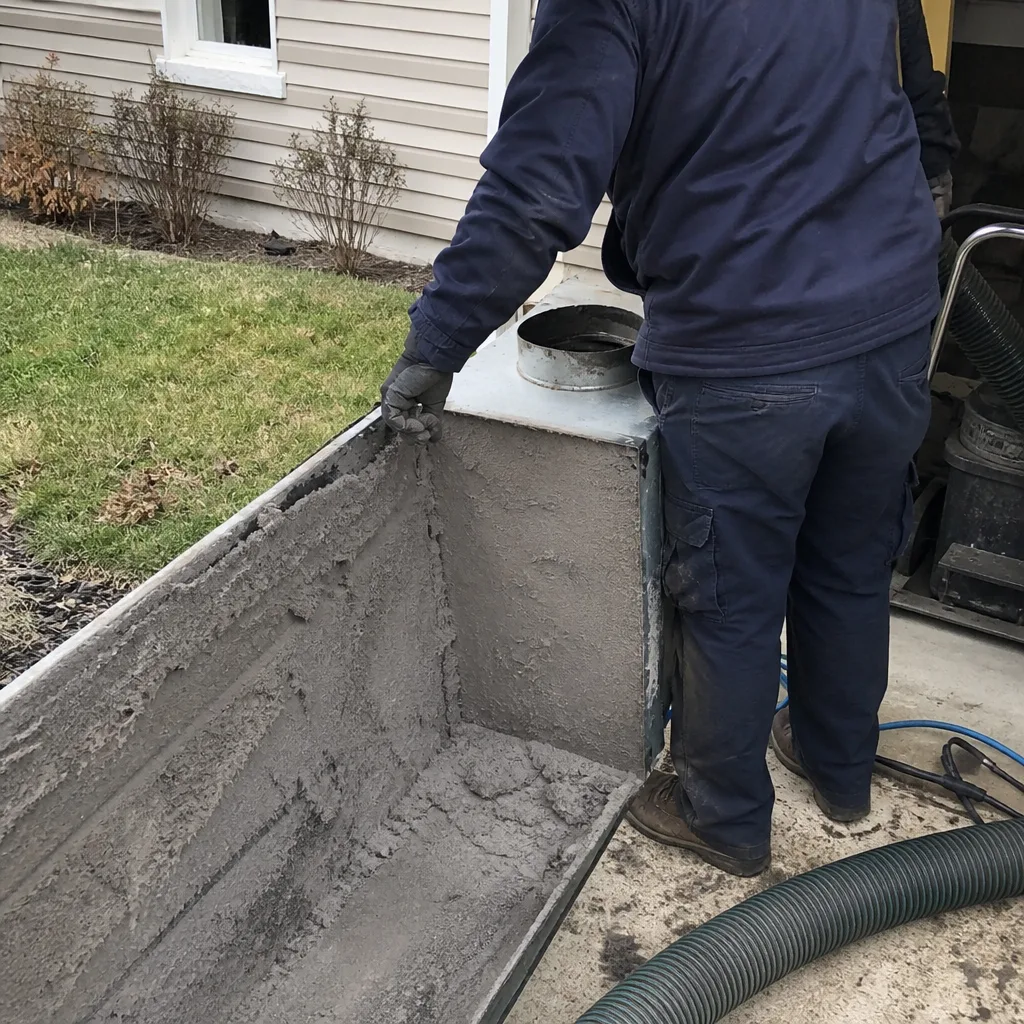 Before
 After
 Before
 After